Introduction: Why OS Updates Matter More Than Ever
In recent years, I’ve noticed that operating system updates are no longer just about fixing bugs or adding minor features—they’ve become a major part of how our devices evolve. Whether you’re using a laptop, smartphone, or even a smart home device, the operating system plays a critical role in performance, security, and overall user experience.
What makes this even more important today is the rapid pace of technological change. With cyber threats becoming more advanced and user expectations higher than ever, regular OS updates ensure that systems stay secure, fast, and compatible with modern applications. In my experience, skipping updates often leads to performance issues or security vulnerabilities that could have easily been avoided.
Another key reason OS updates matter is longevity. Instead of upgrading hardware frequently, many users now rely on software updates to extend the life of their devices. This trend is especially beneficial for students and professionals who want maximum performance without additional costs.
Simply put, OS updates are no longer optional—they are essential for staying secure, efficient, and future-ready.
AI-Powered Operating Systems
One of the biggest shifts I’ve seen in recent OS development is the integration of artificial intelligence directly into the system. Modern operating systems are becoming smarter, more adaptive, and capable of learning from user behavior.
AI-powered operating systems go beyond traditional functionality. They can predict what you need, automate routine tasks, and optimize system performance in real time. This means less manual effort and a more personalized experience for users.
Major tech companies are already moving in this direction, and AI will soon become a core part of every operating system rather than just an optional feature.
Smarter Automation & Assistants
AI-driven automation is transforming how we interact with our devices. Tasks that once required multiple steps can now be handled automatically in the background.
For example, smart assistants can schedule meetings, organize files, manage notifications, and even suggest actions based on your daily habits. In my experience, this kind of automation saves a significant amount of time, especially when juggling multiple tasks.
What I find most impressive is how these assistants continue to improve over time. The more you use them, the better they understand your preferences, making them feel less like tools and more like intelligent companions.
Built-in AI Processing Capabilities
Another exciting trend is the inclusion of built-in AI processing directly within operating systems. Instead of relying entirely on cloud-based AI, modern systems are now capable of handling AI tasks locally on the device.
This shift brings several advantages. First, it improves speed since data doesn’t need to travel to remote servers. Second, it enhances privacy because sensitive information can be processed locally. And third, it allows devices to function even without a constant internet connection.
I was initially skeptical about how effective on-device AI could be, but after comparing it with older systems, the difference is clear. From real-time language translation to advanced photo editing, built-in AI processing is making everyday computing faster and more powerful.
Enhanced Security & Privacy Features
As technology evolves, so do cyber threats—and this is something I’ve personally become more aware of over time. Modern operating systems are no longer just focusing on usability; security and privacy are now at the core of every update.
What I’ve noticed is that newer OS versions are designed with a “security-first” mindset. Instead of reacting to threats after they occur, they aim to prevent them from happening in the first place. From advanced encryption to stricter app permissions, users now have more control over their data than ever before.
Privacy has also become a major priority. Operating systems are introducing features that allow users to see exactly how their data is being used, which apps are accessing it, and when. This level of transparency builds trust and gives users peace of mind in an increasingly connected world.
Zero-Trust Architecture
One of the most important security trends shaping modern operating systems is the concept of zero-trust architecture. At first, I found the idea a bit technical, but once I understood it, it made perfect sense.
In a zero-trust model, the system assumes that no user, device, or application should be trusted by default—even if it’s inside the network. Every access request is verified before permission is granted.
This approach significantly reduces the risk of unauthorized access and data breaches. In my experience, it’s a huge step forward compared to older systems that relied heavily on perimeter-based security.
For businesses and even individual users, this means stronger protection against both external hackers and internal threats.
AI-Driven Threat Detection
Another game-changing development is the use of artificial intelligence to detect and prevent security threats. Traditional antivirus systems rely on known threat signatures, but AI takes this to a whole new level.
AI-driven systems can analyze patterns, detect unusual behavior, and respond to threats in real time. For example, if an application starts behaving suspiciously, the OS can automatically restrict or block it before any damage is done.
What I found particularly impressive is how these systems continuously learn and adapt. They don’t just protect against known threats—they can also identify new and emerging ones.
This proactive approach makes modern operating systems far more resilient and secure than ever before.
Performance Optimization & Efficiency
Performance has always been a key factor for any operating system, but recent updates are taking it to a whole new level. Instead of just making systems faster, developers are focusing on making them smarter and more efficient.
In my experience, newer OS updates don’t just improve speed—they improve how resources are used. This means smoother multitasking, better battery life, and a more responsive overall experience.
Whether you’re working, gaming, or just browsing, these improvements make a noticeable difference in everyday use.
Adaptive Resource Management
One of the most impressive advancements I’ve seen is adaptive resource management. Modern operating systems can now dynamically allocate system resources based on what you’re doing.
For example, if you’re running a heavy application like video editing software, the OS will prioritize CPU and RAM for that task. At the same time, background processes are minimized to ensure optimal performance.
This intelligent resource allocation not only improves speed but also reduces unnecessary power consumption. From my experience, it’s especially helpful on laptops where battery life is critical.
Faster Boot & Update Systems
Another area where operating systems have improved significantly is startup time and updates. I remember when system updates used to take forever and often interrupt work at the worst possible moments.
Now, modern OS updates are designed to be faster, less intrusive, and more efficient. Many systems use background updates, allowing you to continue working without interruptions.
Boot times have also become much quicker thanks to better system optimization and technologies like SSD integration. In my daily routine, this means less waiting and more productivity.
Overall, these improvements may seem small individually, but together they create a much smoother and more enjoyable user experience.
Edge Computing & Distributed Systems Integration
One of the most exciting trends I’ve come across in recent OS development is the integration of edge computing and distributed systems. While this might sound technical at first, the concept is actually very practical and impactful.
Edge computing allows data to be processed closer to where it is generated—on local devices instead of distant cloud servers. This reduces latency, improves speed, and makes real-time applications much more efficient. In my experience, this is especially noticeable in things like smart devices, gaming, and real-time analytics.
Operating systems are evolving to support this shift by intelligently distributing workloads between local devices and remote servers. This means your system can decide what should be processed locally and what can be handled in the cloud.
What I find most impressive is how seamless this process is becoming. Users don’t need to manage anything manually—the OS handles it in the background, ensuring optimal performance and efficiency.
Rise of Cloud-Integrated Operating Systems
Another major trend shaping the future is the rise of cloud-integrated operating systems. Unlike traditional systems that rely heavily on local storage and processing, modern OS platforms are increasingly connected to the cloud.
In my experience, this shift has made accessing files, applications, and even entire work environments much easier. You can start a task on one device and continue it on another without any disruption.
Cloud integration also brings benefits like automatic backups, real-time collaboration, and reduced dependency on high-end hardware. This is particularly useful for students and remote workers who need flexibility and accessibility.
However, what stands out to me is how operating systems are balancing cloud convenience with offline functionality. Even when you’re not connected to the internet, many modern systems still allow you to work efficiently and sync your data later.
Customization & User-Centric Design Trends
One thing I’ve personally enjoyed in recent OS updates is the growing focus on customization and user-centric design. Operating systems are no longer one-size-fits-all—they’re becoming more personalized than ever.
Users can now customize everything from themes and layouts to system behavior and accessibility features. This allows each person to create an experience that suits their preferences and workflow.
What I love most about this trend is how it improves productivity. When your system is tailored to your needs, it feels more intuitive and easier to use. Even small changes, like customizable widgets or smarter notifications, can make a big difference in daily use.
Accessibility is another area where operating systems are improving significantly. Features designed for users with different needs are becoming more advanced and widely available, making technology more inclusive.
Overall, this shift toward user-centric design shows that operating systems are not just becoming more powerful—they’re becoming more human-friendly.
Seamless Cross-Platform Ecosystems
One of the biggest improvements I’ve noticed in modern operating systems is how well different devices now work together. In the past, switching between a phone, laptop, or tablet often felt disconnected. Today, operating systems are building seamless cross-platform ecosystems that make everything feel unified.
For example, you can start writing a document on your laptop, edit it on your phone, and finalize it on a tablet without any hassle. Notifications, apps, and even system settings are now synchronized across devices.
In my experience, this level of integration saves a lot of time and effort. It creates a smooth workflow where you’re not tied to a single device. Instead, your entire ecosystem works together as one.
What’s even more impressive is how this trend is expanding beyond personal devices. Smartwatches, TVs, and even cars are becoming part of the same connected ecosystem, making everyday tasks more convenient and efficient.
Growth of Open-Source and Lightweight OS
Another trend I’ve been following closely is the growing popularity of open-source and lightweight operating systems. Not everyone needs a heavy, resource-intensive OS, and this is where lightweight systems come in.
These operating systems are designed to run efficiently on older or low-spec hardware. In my experience, they can completely transform the performance of an aging laptop or desktop, making it feel fast and usable again.
Open-source platforms also offer greater transparency and flexibility. Users have more control over how the system works, and developers can customize it to meet specific needs. This is especially valuable for students, developers, and small businesses looking for cost-effective solutions.
What I find most appealing is the sense of community behind open-source projects. Continuous improvements, regular updates, and strong user support make these systems a reliable alternative to traditional operating systems.
OS Updates in IoT and Smart Devices
Operating systems are no longer limited to computers and smartphones—they are now at the heart of IoT (Internet of Things) and smart devices. From smart home systems to wearable tech, OS updates are playing a crucial role in keeping these devices secure and functional.
In my experience, regular updates in smart devices are essential. They not only fix bugs but also introduce new features and improve compatibility with other devices in your ecosystem.
Security is especially important in IoT. Since these devices are always connected, they can be vulnerable to cyber threats. Modern OS updates address this by adding stronger encryption, better authentication, and improved monitoring.
What stands out to me is how these updates are becoming more automated. Many smart devices now update themselves in the background, ensuring they stay secure without requiring user intervention.
Overall, as IoT continues to grow, operating systems will play an even bigger role in shaping how our devices communicate, function, and evolve together.
Automation & Self-Healing Systems
One of the most fascinating trends I’ve observed in modern operating systems is the move toward automation and self-healing capabilities. In the past, fixing system errors often required manual troubleshooting, which could be time-consuming and frustrating. Now, operating systems are becoming smart enough to handle many of these issues on their own.
Self-healing systems are designed to detect problems, diagnose them, and apply fixes automatically—often before the user even notices something went wrong. For example, if a background service crashes or a system file becomes corrupted, the OS can restore it without interrupting your work.
In my experience, this makes a huge difference in reliability. Instead of dealing with frequent crashes or slowdowns, the system maintains stability in the background. It feels like having a built-in technician constantly monitoring your device.
Automation also plays a key role here. Routine tasks like updates, disk cleanup, performance optimization, and security scans are increasingly handled without user input. What I really like about this trend is how it reduces the need for technical knowledge—making powerful systems more accessible to everyone.
Future of OS in the AI and Machine Learning Era
Looking ahead, it’s clear that artificial intelligence and machine learning will redefine what operating systems are capable of. From what I’ve seen so far, we’re only at the beginning of this transformation.
Future operating systems will not just respond to user commands—they will anticipate needs, learn behaviors, and adapt in real time. Imagine a system that understands your workflow so well that it prepares apps, resources, and settings before you even ask.
In my experience exploring early AI-powered features, I was skeptical at first, but the results are impressive. Systems are already getting better at predictive performance, intelligent notifications, and personalized user experiences.
Another major shift will be deeper integration between hardware and AI. Operating systems will work closely with specialized processors designed for machine learning tasks, making everything faster and more efficient.
However, what excites me most is the potential for truly intelligent systems. Operating systems could evolve into digital assistants that manage not just your device, but your entire digital life—from work tasks to personal organization.
Of course, this future also comes with challenges, especially around privacy, data usage, and ethical concerns. But if implemented responsibly, AI-driven operating systems could completely transform how we interact with technology.
Challenges & Limitations of Upcoming OS Trends
While the future of operating systems looks incredibly promising, I’ve learned that every innovation comes with its own set of challenges. As exciting as these new trends are, they also introduce complexities that users and developers need to be aware of.
One of the biggest concerns is privacy and data security. With AI-driven features and cloud integration becoming more common, operating systems are handling more personal data than ever before. In my experience, this raises valid concerns about how that data is collected, stored, and used.
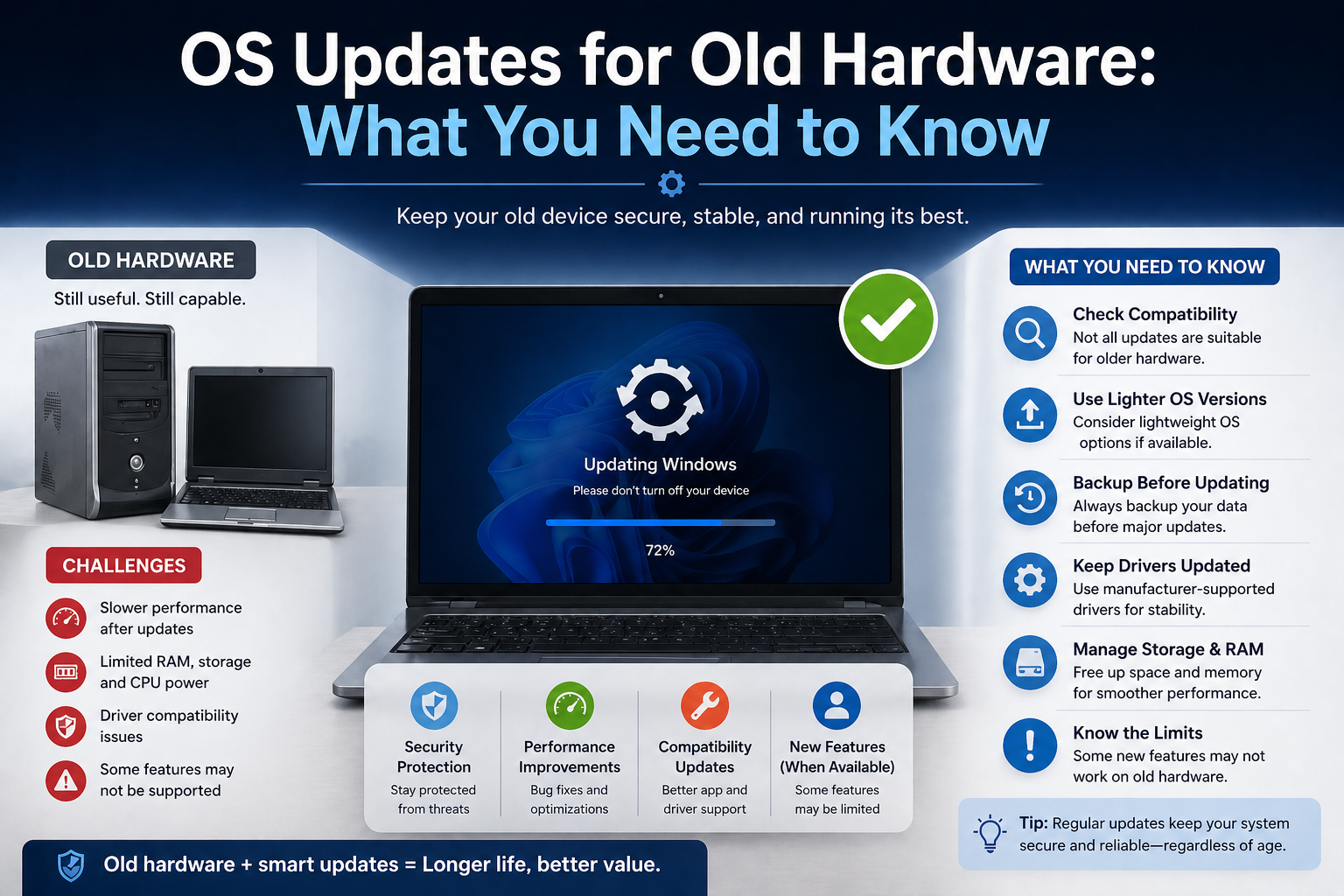
Another limitation is hardware dependency. Many advanced features—especially those related to AI and machine learning—require modern hardware to function effectively. This means users with older devices may not fully benefit from the latest updates, which can create a gap in user experience.
There’s also the issue of system complexity. As operating systems become more powerful, they also become more complicated under the hood. While automation hides much of this complexity, it can sometimes make troubleshooting more difficult when something goes wrong.
Compatibility is another challenge I’ve noticed. With rapid updates and new technologies, some older applications or drivers may not work properly on newer systems. This can be frustrating, especially for users who rely on specific software for work or study.
Lastly, over-reliance on automation and AI can be a double-edged sword. While these features make life easier, they can also reduce user control. In some cases, users may feel disconnected from how their system operates or struggle to override automated decisions.
Despite these challenges, I believe awareness is key. Understanding these limitations helps users make better decisions and adapt more effectively to new technologies.
Conclusion: What These Trends Mean for Users
After exploring all these trends, one thing is clear to me—operating systems are evolving faster than ever, and this evolution is shaping how we interact with technology daily.
From AI-powered features and enhanced security to cloud integration and self-healing systems, modern operating systems are becoming smarter, faster, and more user-focused. In my experience, these advancements are not just about convenience—they’re about creating a more seamless and efficient digital lifestyle.
For users, this means less manual effort, better performance, and more personalized experiences. Whether you’re a student, professional, or casual user, these changes are designed to make your devices work smarter for you.
However, it’s also important to stay informed and adaptable. As operating systems become more advanced, users need to understand both the benefits and the potential challenges that come with them.
In the end, I believe these trends are a positive step forward. They’re not just improving technology—they’re redefining it. And as these innovations continue to grow, they will play a key role in shaping the future of computing for years to come.